With the global drive to cut plastic consumption and the enforcement of regulations including the EU DPP and single-use plastic directives, eco-friendly smart identification credentials are experiencing rapid market growth. Wooden RFID cards stand out as a premium substitute for traditional PVC cards. They are widely adopted for hotel access control, corporate visitor management, membership authentication, digital business cards, and exhibition check-in, emerging as a popular green solution.
Types of Base Materials for Wooden RFID Cards
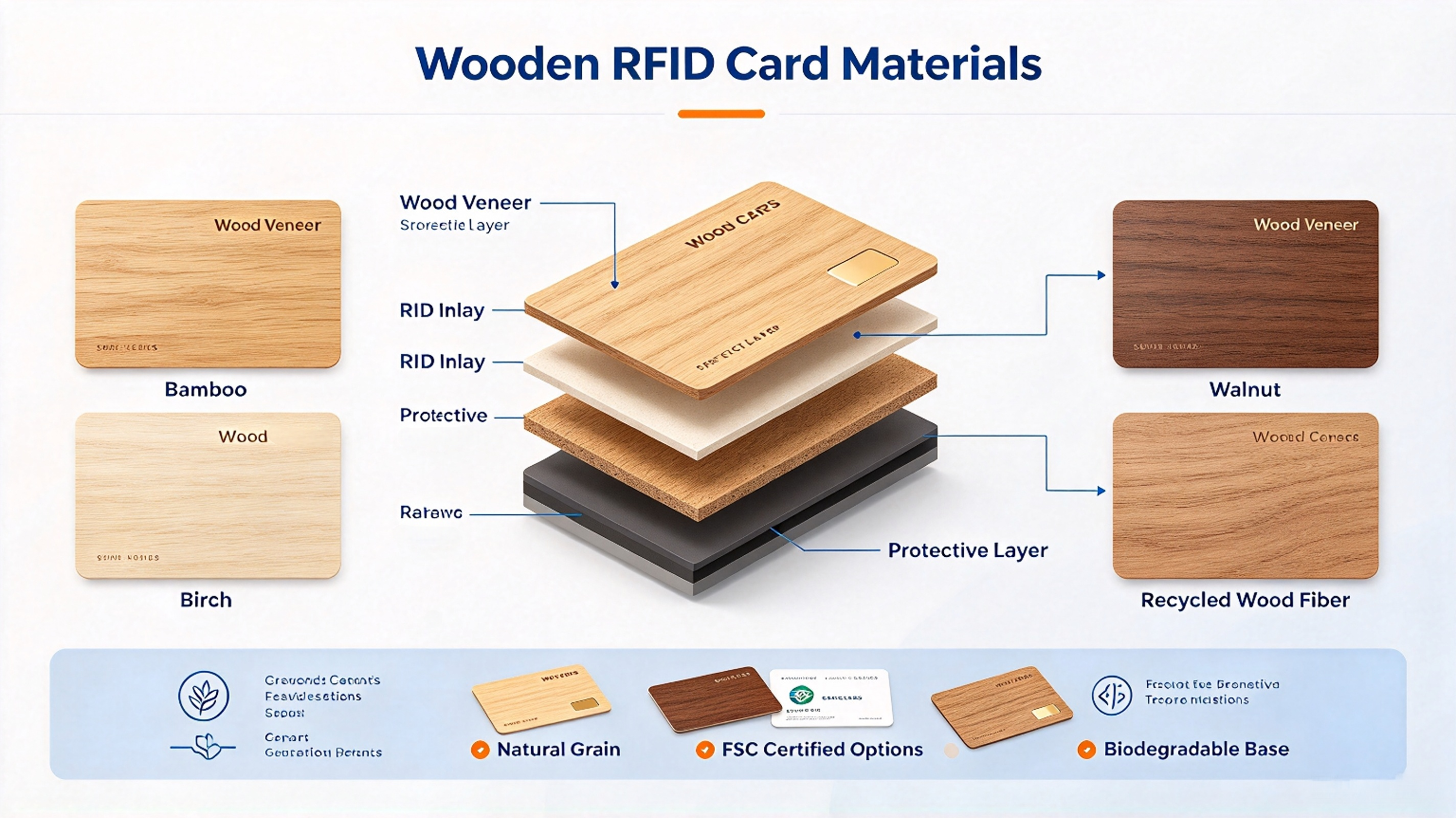
Wood-based RFID cards are manufactured from certified natural timber materials, which are mainly divided into the following categories:
- Bamboo material: The most widely used option. Bamboo grows fast with low carbon footprint, stable texture, good machinability. FSC-certified bamboo is the preferred choice for export orders.
- Solid wood veneer: Including birch, beech, walnut. Delicate natural wood grain, premium tactile feeling, ideal for high-end hospitality and luxury membership cards.
- Wood composite / Recycled wood fiber: Made from recycled wood scraps and plant fibers. Cost-effective, fully biodegradable, suitable for large-volume promotional projects.
Core Manufacturing Processes of Wooden RFID Cards
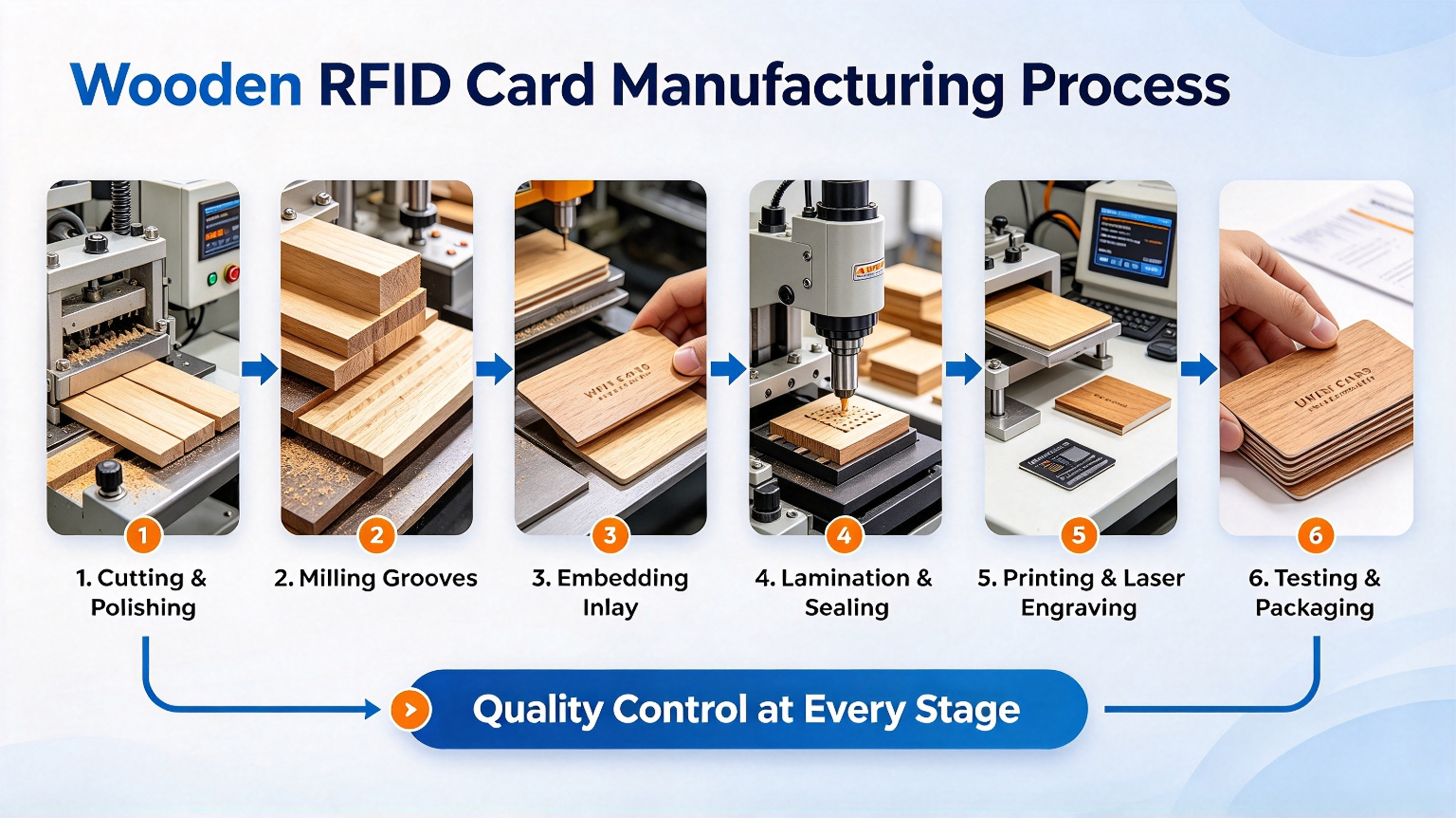
The production workflow combines wood processing and RFID inlay packaging technology:
- Material cutting & surface polishing: Slice and polish wood panels to achieve flat, smooth surfaces.
- Inlay embedding: Precisely embed HF / NFC or UHF RFID inlay into the pre-milled groove on the wood substrate.
- Lamination & sealing: Seal and fix the inlay to avoid antenna damage.
- Surface finishing: Silkscreen printing, laser engraving, UV printing for logos, QR codes or text information.
- Die-cutting: Punch cards into standard CR80 card size or custom shapes.
- Function testing: 100% RF performance inspection to guarantee read/write stability.
Advantages of Wooden RFID Cards vs PVC Cards
- Eco-friendliness: Unlike PVC which is petroleum-based and hard to degrade, wooden RFID cards are biodegradable. FSC-certified materials support customers to meet EU sustainability requirements.
- Premium appearance & tactile experience: Natural wood grain and matte texture create a high-end, distinctive look, far better than plain plastic PVC cards. Great brand presentation.
- Customization flexibility: Supports laser engraving for permanent marking, no fading issue.
- Lower carbon footprint: The whole production chain generates fewer carbon emissions compared to PVC card manufacturing.
- Limitation note: Wooden cards are less resistant to long-time soaking than PVC, so they are recommended for indoor dry scenarios.
Market Outlook of Wooden RFID Cards
Sustainability requirements keep rising worldwide. Many brands, hotels, resorts and enterprises are phasing out plastic PVC cards to reduce plastic waste. Wooden RFID / NFC cards fit perfectly with ESG strategies and EU green regulations.
Driven by booming demand for eco-friendly access cards, membership cards and NFC digital business cards, the wooden RFID card market is expected to maintain steady growth. Ongoing material optimization will further improve moisture resistance and processing efficiency. As a sustainable smart credential, wooden RFID cards will become a mainstream green option for global RFID projects.
