RFID smart cards have become a mainstream identification medium in modern access control systems, supporting secure, efficient, and scalable identity verification for offices, industrial parks, commercial buildings, hotels, and campus facilities.
The core operating principle is based on radio frequency identification technology. An RFID smart card contains an embedded chip and antenna that receive radio frequency signals from an access control reader. Once activated, the card transmits a unique ID number or encrypted identity data back to the reader, which then forwards the information to a controller or background management system. If the credential is valid and the holder has permission, the door lock is released; otherwise, access is denied.
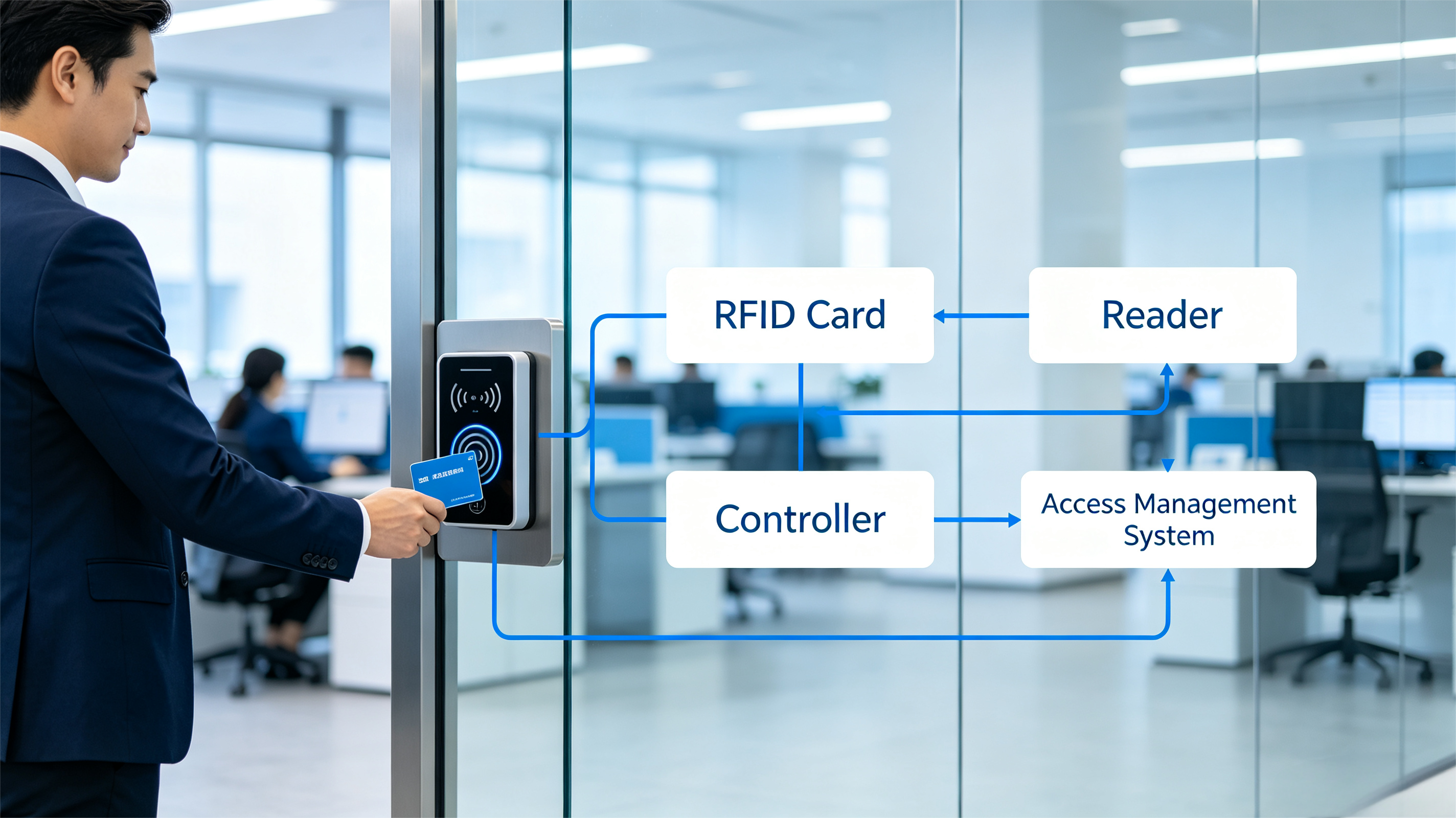
Compared with mechanical keys or traditional passwords, contactless RFID reading offers faster recognition and better management flexibility. Cards can be issued, suspended, or reprogrammed through the system, making it easier for enterprises to manage employee access, visitor credentials, and multi-level security zones.
The application prospects of RFID smart cards in access control remain strong. As corporate security upgrades, smart park construction, and intelligent property management continue to grow, market demand for stable and reliable identification media is also increasing. Beyond basic door access, RFID smart cards are being combined with attendance systems, visitor management, and cloud-based access control platforms to form broader security and personnel management solutions.
In terms of innovative development, several trends are shaping the industry.
The first is multi-protocol compatibility, where RFID and NFC functions are integrated into one smart card for access control, identification, internal payment, and other applications.
The second is security upgrades through CPU smart cards, which provide hardware-level encryption and stronger protection against card cloning or tampering.
The third is the integration of IoT and cloud-based access control, enabling administrators to manage card permissions remotely and store access logs in the cloud.
Finally, customized solutions are playing a greater role, especially in industrial factories, laboratories, healthcare facilities, and high-security environments.
In conclusion, RFID smart cards have evolved from a simple access medium into an important component of smart security systems. With the continuous development of encrypted chips, NFC technology, and IoT platforms, the access control market will continue to expand. For manufacturers, developing high-quality RFID smart cards, CPU cards, NFC-compatible cards, and customized RFID tags will be key to capturing new opportunities in the smart security sector.
